There is a different kind of momentum building in product teams right now, and it’s hard to ignore.
In a world flooded with AI, AI product management tools, AI roadmaps, AI marketing, and AI everything, an unexpected movie has been recently living rent-free in my head, Sully. Maybe it’s because, as the business world keeps talking about AI, I keep thinking about that moment on the Hudson. One man. Seconds to decide. A choice rooted in experience and instinct. And because of that choice, 155 people went home that day.
Before we get ahead of ourselves, let’s do a quick recap of the film to get you up to speed.
A Quick Recap Of The Movie Sully
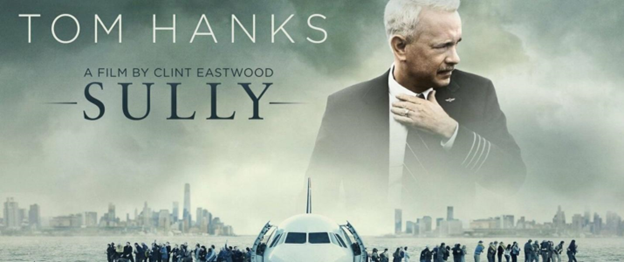
The 2016 film Sully, starring Tom Hanks and based on a true story, follows the story of Captain Chesley “Sully” Sullenberger. After a bird strike causes both engines on a US Airways flight to fail, Sully makes the call to land the plane on the Hudson River, saving all 155 passengers and crew on board.
What the movie focuses on next is not the miracle, but the aftermath. That’s the part that stayed with me. Despite being hailed as a hero, Sully faces intense scrutiny and questions about whether he could have safely returned to the airport instead of risking a water landing. His judgment, experience, and career are put under a microscope, all while he quietly deals with the emotional weight of what happened.
Human Expertise Versus Machines
When both engines failed, Captain Sullenberger had only seconds to make a decision. There was no opportunity to test scenarios or consult data. The choice had to be made in real time, under pressure, with incomplete information. He relied on experience, training, and judgment to land the plane on the Hudson River. Everyone survived.
What followed was a formal investigation by the National Transportation Safety Board (NTSB). The focus shifted from the outcome to the decision itself. Using computer simulations, investigators evaluated whether the aircraft could have safely returned to an airport after the engine failure. The models suggested that a runway landing was possible.
On paper, the data challenged Sully’s call. The simulations appeared to show a safer alternative, one that did not involve a water landing. Sully was required to explain and defend his decision, not based on what happened, but on what the models believed could have happened.
This is where the tension becomes clear. The decision that saved every life was now being measured against systems that evaluated outcomes without context, without hesitation, and without the realities of human response in a moment of crisis.

The Overlooked Human Element
What the NTSB simulations failed to account for was not skill or intelligence. It was the human element.
More specifically, the human pause. The moment it takes to register fear. The split second between realizing what is happening and deciding what to do next. When that pause was finally factored in, the story changed. Sixteen simulations failed. Only the seventeenth simulation managed to land safely at an airport.
Seventeen tries for a machine to find a different outcome, while the human had already saved everyone on board.
That contrast is hard to ignore. And it is not limited to a movie. Most of us have seen some version of this play out in our own work. Human experience and judgment stepping in when the data alone falls short. People making the call when there is no perfect information and no second chance.
That is the part we cannot afford to lose.
The Importance Of The Human Element In The Age Of AI
So, what does Sully have to do with the age of AI we are all now living in?
AI is incredible. It is already changing how we work and how we build, and it will take us further than we ever imagined. It will open doors, speed discovery, and help us see things we might have missed. But as it becomes more embedded in business and product life, we cannot lose sight of what makes us, us.
We feel. We care. We create products that understand people, not just patterns. Our customers and our teams are not data points. They are humans, with needs, emotions, and realities that do not always fit neatly into a model. Just as the NTSB realized in Sully, their models were not ready to fully account for the human element Sully brought into that moment.
We build with empathy, with love for the customer, with a desire to make life better for the people on the other side of what we create. That is something no algorithm can replicate, no matter how advanced it becomes. There is a kind of judgment and awareness that only people can recognize and act on. AI can make predictions. Humans make meaning, and that meaning shapes better decisions.
So yes, let’s use AI. Let’s learn from it, explore it, and let it help us grow in our business and product management endeavors. But let’s remember who built it, who guides it, and who still brings the heart. After all, only humans can account for the human factor.

Product Management Expertise Guiding AI
Wondering what you can do to make sure your expertise is ready to factor in the human element when working alongside AI in your business? Investing in your foundational knowledge of product management, marketing, and branding is one of the most effective ways to prepare in the age of AI. AI is a powerful tool. In the hands of a skilled and experienced product manager, its impact can be significant.
Here are a few practical ways to make sure you’re ready for the evolving AI driven business landscape.
- Invest in certification courses for Product Management, Product Marketing Management, Brand Management, and others. These programs help reinforce key fundamentals, while introducing strategies aligned to today’s rapidly changing business environment.
- Commit to regular reading of industry leading product management and marketing practices and fundamentals. We strongly recommend the ProdBOK®, which is packed with industry insights, best practices, and practical tools.
- Stay up to date with the latest on the business horizon with our Product Management Buzz. This is a hub for recent product management developments, tools, and related resources. It’s a valuable resource for any product manager.
What are you waiting for? AI will continue to advance. The computers are missing the human element, and we know that you can fill the gap and bring the human factor!